



Omega-3 & DHA: What the Research Actually Says
If you've ever wondered whether you're getting enough omega-3 — or whether it's worth supplementing at all — the research has some fairly direct answers. Here's what the numbers actually say.
The short version: experts recommend 250–500 mg of DHA and EPA per day for adults. Most people get about half that from food. And your body can't efficiently make DHA from plant sources like flax or chia — it has to come from a direct source.
What DHA Actually Does
DHA (docosahexaenoic acid) is the dominant structural omega-3 in the brain and retina. Adequate DHA status supports cognitive performance and visual acuity, and DHA plays a pivotal role in brain and eye development — particularly during the first 1,000 days of life.
Its companion omega-3, EPA, carries emerging evidence for supporting mood and well-being in adulthood. Together they support cardiovascular, brain, eye, and immune health — benefits recognized in authorized health claims by several regulatory authorities.
How Much You Actually Need
Authoritative scientific organizations recommend 250–500 mg of combined DHA and EPA daily for healthy adults.
Here's the gap: in a 2025 clinical study, participants' food diaries showed an average intake of roughly 133 mg per day — about half the lower bound of the recommendation. That matches dietary surveys across more than 30 countries showing most of the world consumes less omega-3 than recommended.
Why Flax and Chia Can't Close the Gap
Plant seeds like flax, chia, and walnut provide ALA — a different omega-3. The body's conversion of ALA into DHA and EPA is inefficient, and research describes plant ALA sources as offering minimal support for raising blood DHA and EPA levels.
If the goal is DHA in your bloodstream, you need a direct source: fatty fish, fish oil, or algal oil.
What the Clinical Research Shows
A randomized, double-blind, placebo-controlled trial analyzed plasma phospholipid levels in 74 adults after 6 and 14 weeks of taking omega-3 supplements from either microalgal or fish oil. The result: algal oil was statistically non-inferior to fish oil at raising blood DHA and EPA levels — and levels were already significantly elevated by week 6 of consistent daily intake.
Consistency is the operative word. Blood levels rose with daily use over weeks, not days — which is why the format you'll actually take every day matters more than the format with the most impressive label.
How to Choose an Omega-3 Supplement
Whatever brand you choose, check four things: the actual DHA and EPA amounts on the Supplement Facts panel (not just an "omega-3 blend" total), the source, third-party testing with published certificates of analysis, and certifications that match your needs — vegetarian, Halal, Non-GMO.
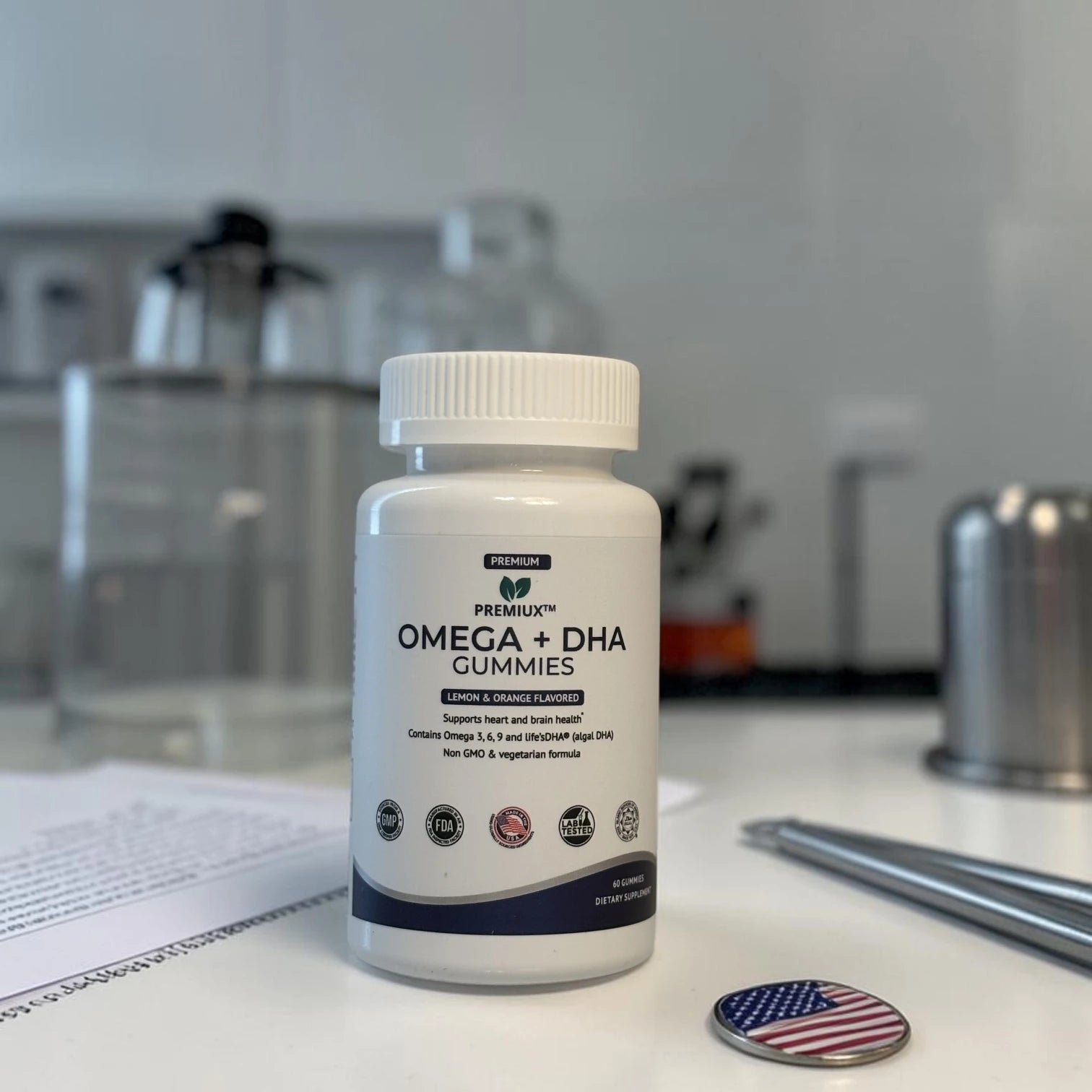
We cover the sourcing question in depth in Algae vs. Fish Oil: What the Science Actually Says About DHA, and how to read a certificate of analysis on our Quality Standards page. Premiux's own Omega + DHA Gummies use life'sDHA® algal DHA, third-party tested with published results.
The Bottom Line
Most people run an omega-3 gap of roughly half the recommended intake, plant ALA can't close it, and the 2025 head-to-head trial confirms algal DHA works as well as fish oil. Whether you close the gap with fatty fish, fish oil, or algal oil — check the label, verify the testing, and take it consistently.
These statements have not been evaluated by the Food and Drug Administration. This product is not intended to diagnose, treat, cure, or prevent any disease. This article is educational and not a substitute for advice from your healthcare provider.
References: Bailey E, et al. Comparative Bioavailability of DHA and EPA from Microalgal and Fish Oil in Adults. International Journal of Molecular Sciences. 2025;26(19):9343. doi:10.3390/ijms26199343. NIH Office of Dietary Supplements, Omega-3 Fatty Acids Fact Sheet.



Leave a comment
This site is protected by hCaptcha and the hCaptcha Privacy Policy and Terms of Service apply.