



DHA and Your Brain: The Structural Science of Algal Omega-3
Fish get a lot of credit for DHA. It isn't really theirs to take.
Fish don't produce DHA on their own — they get it from eating algae. Which raises an obvious question: if algae is where DHA actually starts, why go through fish at all?
Here's what the research says about where DHA comes from, why your brain and eyes are so dependent on it, and how algal DHA holds up against fish oil head-to-head.
Algae Is the Original Source
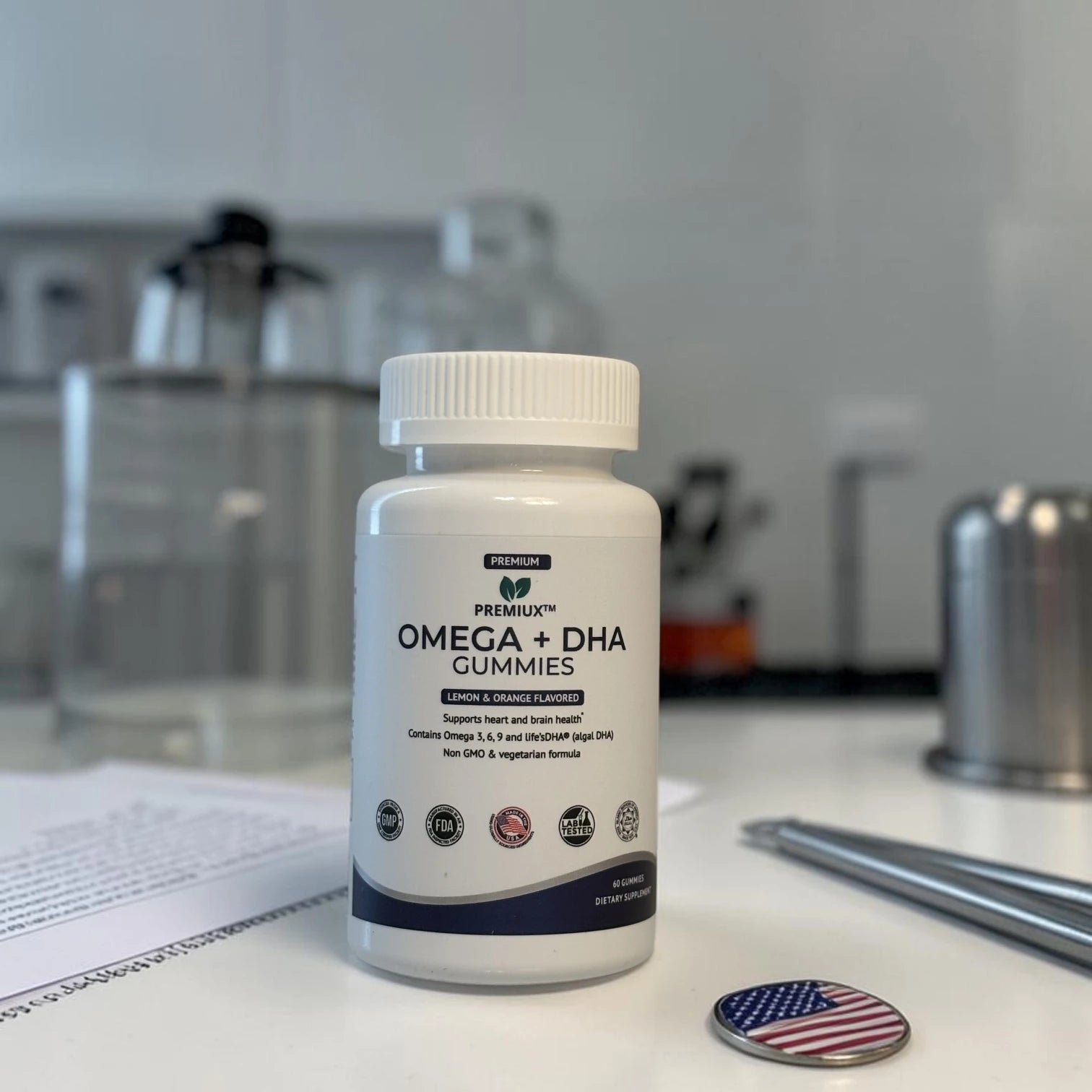
A 2014 review of vegetarian omega-3 sources in Critical Reviews in Food Science and Nutrition confirmed what the biology already suggests: algal DHA is capable of raising DHA levels in human blood on its own, making fish an unnecessary middleman in the delivery chain. Premiux's Omega + DHA Gummies go directly to that source with fish-free algal DHA.
Why DHA Matters: The Brain and Eye Connection
DHA isn't a generic "healthy fat." According to the NIH Office of Dietary Supplements, it's highly concentrated in the human brain, where it functions as an important structural fatty acid in neuronal cell membranes. A direct DHA source gives your body DHA without requiring the inefficient conversion process that plant-based ALA fats depend on.
Your retina tells a similar story. It contains especially high concentrations of DHA, where it serves as a structural component of retinal cell membranes. That's what makes DHA a nutrient tied to both brain and eye biology, not just one or the other.
Algae vs. Fish, Tested Head-to-Head
Can algae actually deliver DHA as effectively as fish? A study published in the Journal of the American Dietetic Association put that question to the test directly, comparing algal-oil capsules against cooked salmon. The result: both produced comparable DHA delivery to blood in human subjects.
More recent research backs this up further. A 2025 randomized, double-blind clinical trial found that modern microalgal omega-3 oils achieve DHA and EPA bioavailability statistically comparable to fish oil. The omega-3 story doesn't have to start with fish.
The Bottom Line
Algae is where DHA actually originates, it's structurally essential to both brain and retinal biology, and human trials confirm algal DHA performs on par with fish oil at raising blood DHA levels. That's the case for a direct, fish-free source — which is exactly what Premiux's Omega + DHA Gummies provide. For more on how algal DHA compares to fish oil and how much DHA you actually need daily, see our related articles: Algae vs. Fish Oil: What the Science Actually Says About DHA, and Omega-3 & DHA: What the Research Actually Says.
These statements have not been evaluated by the Food and Drug Administration. This product is not intended to diagnose, treat, cure, or prevent any disease.
References: Lane K, et al. Bioavailability and potential uses of vegetarian sources of omega-3 fatty acids: a review of the literature. Critical Reviews in Food Science and Nutrition. 2014;54(5):572-579. NIH Office of Dietary Supplements. Omega-3 Fatty Acids Fact Sheet. Arterburn LM, et al. Algal-oil capsules and cooked salmon: nutritionally equivalent sources of docosahexaenoic acid. Journal of the American Dietetic Association. 2008;108(7):1204-1209. Bailey E, et al. Comparative Bioavailability of DHA and EPA from Microalgal and Fish Oil in Adults. International Journal of Molecular Sciences. 2025;26(19):9343.



Leave a comment
This site is protected by hCaptcha and the hCaptcha Privacy Policy and Terms of Service apply.